
The enterprise voice AI market is experiencing a major disruption. Mistral AI has just released a text-to-speech model that the company claims outperforms ElevenLabs — and instead of keeping it proprietary, they are releasing the model weights for free.
This move is set to shake up a market valued at 22 billion USD globally in 2026, with the voice AI agents segment alone projected to reach 47.5 billion USD by 2034.
A New Challenger Enters the Voice AI Arena
The voice synthesis space has been dominated by ElevenLabs for the past few years, with their AI voice technology becoming the go-to solution for everything from podcast production to customer service automation. But Mistral AI latest release signals that the competition is heating up significantly.
According to Mistral AI, their new TTS model achieves superior voice quality, naturalness, and emotional range compared to ElevenLabs flagship offering. The company has published benchmark results showing their model outperforming ElevenLabs across multiple metrics including Mean Opinion Score (MOS) and emotional expression tasks.

The Open Source Advantage
What makes this release particularly significant is Mistral AI decision to release the model weights openly. This means developers and companies can download, fine-tune, and deploy the model without paying licensing fees or being tied to a proprietary API.
We believe in democratizing AI technology. By releasing these weights, we are enabling the entire ecosystem to build on top of our research and create specialized applications we have not even imagined yet.
This approach mirrors Mistral AI earlier success with their language models, which gained widespread adoption precisely because of their open-weight strategy. The company has consistently demonstrated that open models can compete with — and sometimes outperform — closed alternatives.
Market Implications
The timing of this release is notable. Just this week, ElevenLabs and IBM announced a collaboration to bring premium voice capabilities to IBM watsonx Orchestrate platform. Google Cloud has been expanding its Chirp 3 HD voices, and OpenAI continues iterating on its speech synthesis technology.
With Mistral AI entering the fray with a free, open-weight model, established players may need to reassess their pricing strategies. For startups and smaller companies, this levels the playing field significantly, allowing them to access state-of-the-art voice synthesis without massive API costs.
Getting Started
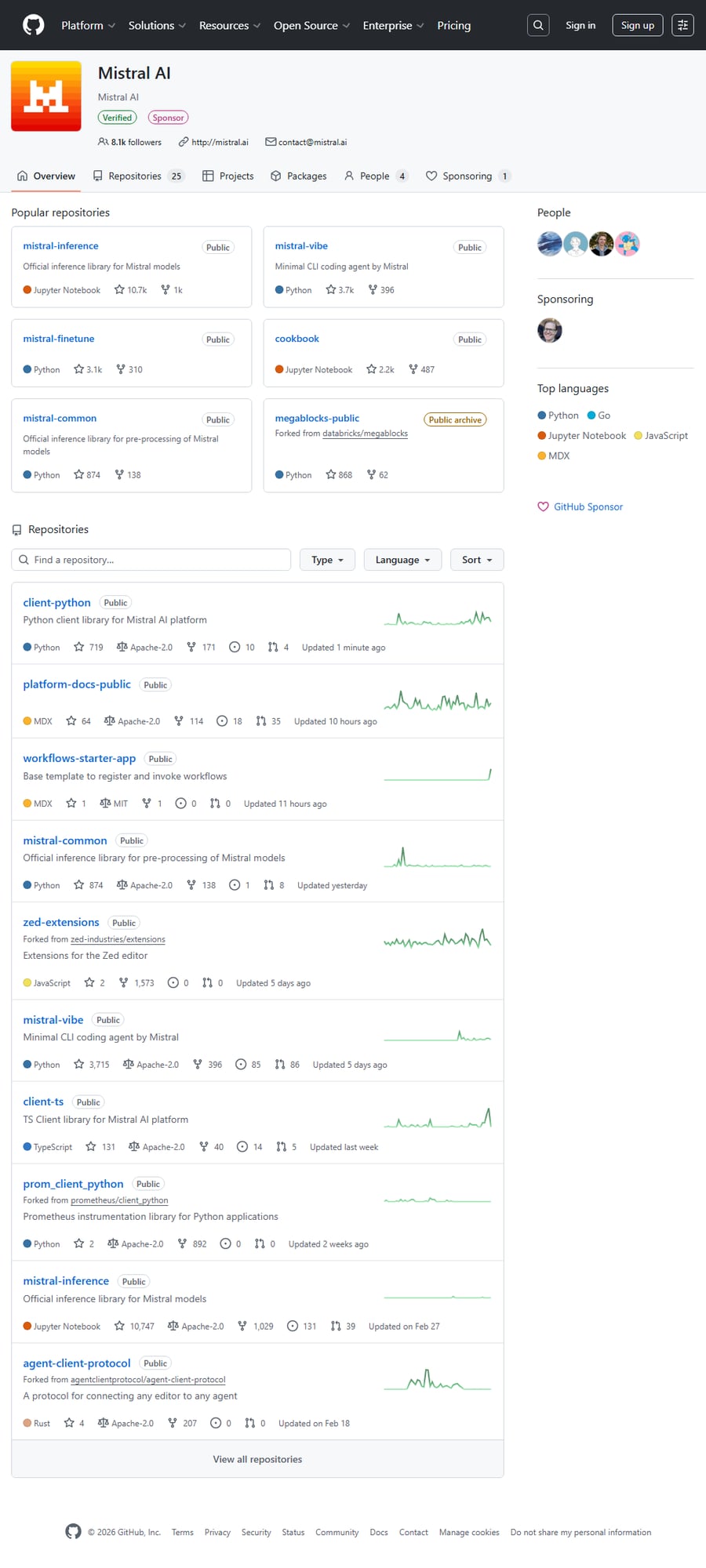
Developers interested in exploring the new Mistral AI TTS model can find the weights and implementation details on their GitHub repository. The model supports multiple languages and voice styles, with documentation available for both basic implementation and advanced fine-tuning workflows.
As the voice AI market continues its explosive growth, Mistral AI open-source release marks a pivotal moment that could fundamentally reshape competitive dynamics in the space.