Category: AI Tools

  • Why AI Agent Demos Impress but Production Disappoints: The Three Disciplines Enterprises Are Learning

    Why AI Agent Demos Impress but Production Disappoints: The Three Disciplines Enterprises Are Learning

    You’ve seen the demos. AI agents that handle customer inquiries, process refunds, and schedule appointments with superhuman efficiency. But behind the glossy presentations lies a sobering reality: most AI agent deployments fail to deliver on their promise in production environments.

    Getting AI agents to perform reliably outside of controlled demonstrations is turning out to be harder than enterprises anticipated. Fragmented data, unclear workflows, and runaway escalation rates are slowing deployments across industries. The technology itself often works well in demonstrations鈥攖he challenge begins when it’s asked to operate inside the complexity of a real organization.

    The Three Disciplines of Production AI

    Creatio, a company that’s been deploying AI agents for enterprise customers, has developed a methodology built around three core disciplines:

    • Data virtualization to work around data lake delays
    • Agent dashboards and KPIs as a management layer
    • Tightly bounded use-case loops to drive toward high autonomy

    In simpler use cases, these practices have enabled agents to handle 80-90% of tasks autonomously. With further tuning, Creatio estimates they could support autonomous resolution in at least half of more complex deployments.

    Why Agents Keep Failing

    The obstacles are numerous. Enterprises eager to adopt agentic AI often run into significant bottlenecks around data architecture, integration, monitoring, security, and workflow design.

    The data problem is almost always first. Enterprise information rarely exists in a neat or unified form鈥攊t’s spread across SaaS platforms, apps, internal databases, and other data stores. Some is structured, some isn’t. But even when enterprises overcome the data retrieval problem, integration becomes a major challenge.

    Agents rely on APIs and automation hooks to interact with applications, but many enterprise systems were designed before this kind of autonomous interaction was even conceived. This results in incomplete or inconsistent APIs, and systems that respond unpredictably when accessed programmatically.

    Perhaps most fundamentally, organizations attempt to automate processes that were never formally defined. As one analyst noted, many business workflows depend on tacit knowledge鈥攖he kind of exceptions that employees handle intuitively without explicit instructions. Those missing rules become startlingly obvious when workflows are translated into automation logic.

    The Tuning Loop That Actually Works

    Creatio deploys agents in a bounded scope with clear guardrails, followed by an explicit tuning and validation phase. The loop typically follows this pattern:

    Design-time tuning (before go-live): Performance is improved through prompt engineering, context wrapping, role definitions, workflow design, and grounding in data and documents.

    Human-in-the-loop correction (during execution): Developers approve, edit, or resolve exceptions. When humans have to intervene most frequently鈥攅scalation or approval scenarios鈥攗sers establish stronger rules, provide more context, and update workflow steps, or narrow tool access.

    Ongoing optimization (after go-live): Teams continue to monitor exception rates and outcomes, then tune repeatedly as needed, helping improve accuracy and autonomy over time.

    Retrieval-augmented generation (RAG) grounds agents in enterprise knowledge bases, CRM data, and proprietary sources. The feedback loop puts extra emphasis on intermediate checkpoints鈥攈umans review artifacts such as summaries, extracted facts, or draft recommendations and correct errors before they propagate.

    Data Readiness Without the Overhaul

    Is my data ready? is a common early question. Enterprises know data access is important but can be turned off by massive data consolidation projects. But virtual connections can allow agents access to underlying systems without requiring enterprises to move everything into a central data lake.

    One approach pulls data into a virtual object, processes it, and uses it like a standard object for UIs and workflows鈥攏o need to persist or duplicate large volumes of data. This technique is particularly valuable in banking, where transaction volumes are simply too large to copy into CRM but are still valuable for AI analysis and triggers.

    Matching Agents to the Work

    Not all workflows are equally suited for autonomous agents. The best fits are high-volume processes with clear structure and controllable risk鈥攄ocument intake and validation in onboarding, loan preparation, standardized outreach like renewals and referrals.

    Financial institutions provide a compelling example. Commercial lending teams and wealth management typically operate in silos, with no one looking across departments. An autonomous agent can identify commercial customers who might be good candidates for wealth management or advisory services鈥攕omething no human is actively doing at most banks. Companies that have applied agents to this scenario claim significant incremental revenue benefits.

    In regulated industries, longer-context agents aren’t just preferable, they’re necessary. For multi-step tasks like gathering evidence across systems, summarizing, comparing, drafting communications, and producing auditable rationales, the agent isn’t giving you a response immediately鈥攊t may take hours or days to complete full end-to-end tasks.

    This requires orchestrated agentic execution rather than a single giant prompt. The approach breaks work into deterministic steps performed by sub-agents, with memory and context management maintained across various steps and time intervals.

    The Digital Worker Model

    Once deployed, agents are monitored with dashboards providing performance analytics, conversion insights, and auditability. Essentially, agents are treated like digital workers with their own management layer and KPIs.

    Users see a dashboard of agents in use and each of their processes, workflows, and executed results. They can drill down into individual records showing step-by-step execution logs and related communications鈥攕upporting traceability, debugging, and agent tweaking.

    2026 is shaping up to be the year enterprise AI moves from impressive demos to reliable production systems鈥攂ut only for organizations willing to invest the time in proper training and tuning.

  • Hermes Agent: The Self-Improving AI Agent That Learns From Every Conversation

    Hermes Agent: The Self-Improving AI Agent That Learns From Every Conversation

    Artificial intelligence agents are everywhere these days, but most of them share a fundamental limitation: they don’t really learn from their experiences. You have the same conversation with them repeatedly, and they never get better. Nous Research aims to change that with Hermes Agent, a new open-source project that bills itself as “the agent that grows with you.”

    A Memory That Actually Remembers

    Traditional AI assistants treat every conversation as a clean slate. Hermes takes a fundamentally different approach. It maintains persistent memory across sessions, creating skills from experience and improving them during use. The agent nudges itself to retain knowledge, searches through past conversations, and builds a deepening model of who you are over time.

    “The only agent with a built-in learning loop,” as the project describes itself, goes beyond simple context windows. While conventional agents can only work with what you tell them in the current session, Hermes actively works to preserve and apply knowledge from previous interactions. That customer you mentioned last week? Hermes remembers. That preference you expressed months ago? It’s still there.

    Works Everywhere You Do

    One of Hermes’s standout features is its multi-platform support. You can interact with it through Telegram, Discord, Slack, WhatsApp, Signal, or traditional CLI鈥攁ll from a single gateway process. Voice memo transcription and cross-platform conversation continuity mean you can start a conversation on your phone and continue it on your desktop without missing a beat.

    The agent runs on a VPS, a GPU cluster, or serverless infrastructure that costs nearly nothing when idle. With Daytona and Modal, the agent’s environment hibernates when idle and wakes on demand. This means you get persistent assistance without persistent costs.

    Model Flexibility Without Lock-In

    Hermes doesn’t force you into a single AI provider. You can use Nous Portal, OpenRouter (with access to 200+ models), z.ai/GLM, Kimi/Moonshot, MiniMax, OpenAI, or your own endpoint. Switching models is as simple as running the model command鈥攏o code changes, no lock-in.

    This flexibility is particularly valuable for developers who want to experiment with different models for different tasks, or organizations that need to balance cost and performance across use cases.

    The Skills System

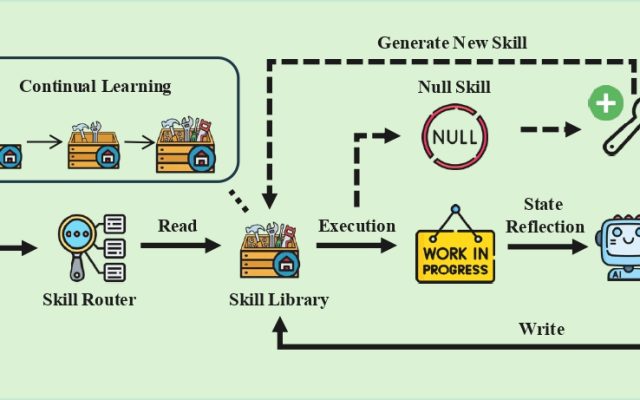
    Hermes includes a sophisticated skills system that allows the agent to create procedural memories and improve them autonomously. After completing complex tasks, the agent can create new skills that encapsulate what it learned. These skills then self-improve during subsequent use.

    The system uses FTS5 session search with LLM summarization for cross-session recall, and is compatible with the agentskills.io open standard. There’s also a Skills Hub where users can share and discover community-created skills.

    Research-Ready Architecture

    For AI researchers, Hermes offers batch trajectory generation, Atropos RL environments, and trajectory compression for training the next generation of tool-calling models. The project was built by Nous Research, the team behind several notable open-source AI projects.

    The installation process is straightforward鈥攔un a single curl command and you’re chatting with your new AI assistant in minutes. Windows users need WSL2, but Linux and macOS are supported natively.

    Migration from OpenClaw

    Interesting twist: Hermes can automatically import settings from OpenClaw, including persona files, memories, skills, API keys, and messaging configurations. If you’re already running an AI assistant setup, moving to Hermes is designed to be painless.

    With over 12,000 stars on GitHub, Hermes represents an interesting evolution in the AI agent space. Instead of just providing a static set of capabilities, it attempts to create a genuinely learning system鈥攐ne that gets better at helping you specifically, over time.

    The MIT-licensed project welcomes contributions and has an active Discord community for support and discussion. Whether you’re an individual looking for a more personal AI assistant or an enterprise exploring agentic workflows, Hermes offers a compelling combination of memory, flexibility, and self-improvement that sets it apart from the crowded agent space.

  • MoneyPrinterV2: The Open-Source AI Tool That’s Automating Online Income (And Sparking Debate)

    MoneyPrinterV2: The Open-Source AI Tool That’s Automating Online Income (And Sparking Debate)

    It has nearly 25,000 GitHub stars and has earned over 2,900 stars in a single day. Love it or question it, MoneyPrinterV2 is impossible to ignore. The project, officially described as “an application that automates the process of making money online,” is one of the most talked-about open-source AI tools on GitHub right now.

    Created by developer FujiwaraChoki, MoneyPrinterV2 is a complete rewrite of the original MoneyPrinter project, built with a modular architecture and a much wider feature set. It leverages AI models — including gpt4free for text generation and KittenTTS for voice synthesis — to automate the creation and distribution of online content at scale.

    What MoneyPrinterV2 Actually Does

    The core capabilities of MoneyPrinterV2 break down into several automated workflows:

    • Twitter Bot with CRON Scheduling: Automatically generates and posts tweets on a schedule using AI. Configure your topics, tone, and posting frequency, and the bot handles content creation and publication independently.
    • YouTube Shorts Automater: Takes a text prompt or article, generates a script using AI, creates a voiceover with KittenTTS, pairs it with relevant video clips or generated visuals, and exports a formatted short video ready for YouTube Shorts. CRON job support means you can queue batches for automatic upload.
    • Affiliate Marketing Module: Connects to Amazon’s affiliate program and Twitter to identify products, generate promotional content, and post affiliate links automatically.
    • Local Business Outreach: Finds local businesses and generates cold outreach campaigns — all AI-powered.

    Under the Hood

    MoneyPrinterV2 requires Python 3.12 and is designed for straightforward installation:

    git clone https://github.com/FujiwaraChoki/MoneyPrinterV2.git
    cd MoneyPrinterV2
    cp config.example.json config.json
    # Fill out your API keys and configuration in config.json
    python -m venv venv && source venv/bin/activate
    pip install -r requirements.txt
    python src/main.py

    Advanced users can also leverage shell scripts in the /scripts directory for direct CLI access to core functionality without the web interface.

    The Controversy

    MoneyPrinterV2 exists in a gray area that the open-source AI community has not fully grappled with. On one hand, it is a genuinely impressive piece of engineering — automating video creation, content scheduling, and affiliate linking using free AI models is technically non-trivial. On the other hand, it is explicitly designed to generate scale content for commercial purposes with minimal human oversight.

    The project’s own disclaimer states:

    “This project is for educational purposes only. The author will not be responsible for any misuse of the information provided.”

    This is the same boilerplate language used by most AI tools that could theoretically be misused — and like most such disclaimers, it raises more questions than it answers. The question of whether an automated content factory at this scale is “educational” is one the community will continue to debate.

    The Community Fork: MoneyPrinterTurbo

    One sign of MoneyPrinterV2’s popularity is the emergence of community forks. The most notable is MoneyPrinterTurbo, a Chinese-language version that has also gained significant traction. The proliferation of forks in multiple languages underscores the global demand for AI-powered content automation tools.

    What the Numbers Tell Us

    With nearly 25,000 stars in what appears to be a relatively short timeframe, MoneyPrinterV2 is among the fastest-growing open-source AI projects on GitHub. The combination of AI video generation, social media automation, and affiliate marketing in a single modular application addresses a real pain point for indie creators, digital marketers, and anyone looking to generate passive income through content — even if the ethics of that automation remain debatable.

    Whether you view it as a productivity breakthrough or a warning sign about AI-generated content flooding the internet, MoneyPrinterV2 is a project worth understanding. The code is open, the features are real, and its growth trajectory suggests it is filling a genuine market demand.

    Explore the source code and documentation on GitHub.